   |
The production and
final use of our
Rotary Cut Veneer of Beech
 The beech veneer business
starts even in the forest. The beech logs have to be selected very carefully
to get wood with a small brown heart. Besides the workers in the forest
and the transport company have to pay attention because the felling and
subsequent operations causes sorne, but nevertheless dangerous cracks
on the end surfaces of the logs and should be avoided as good as possible.
A rather primitive but to some extent effective measure is the use of
iron clamps. It is essential that these clamps are inserted in the end
surfaces before the drying process starts and before loading on trucks.
After this prevention, the logs should be put in wet storage to prevent
the drying. The felling period of Beech logs start in November until March
because of that, a big quantity had to be stored under water, to be able
to produce every time.
The beech veneer business
starts even in the forest. The beech logs have to be selected very carefully
to get wood with a small brown heart. Besides the workers in the forest
and the transport company have to pay attention because the felling and
subsequent operations causes sorne, but nevertheless dangerous cracks
on the end surfaces of the logs and should be avoided as good as possible.
A rather primitive but to some extent effective measure is the use of
iron clamps. It is essential that these clamps are inserted in the end
surfaces before the drying process starts and before loading on trucks.
After this prevention, the logs should be put in wet storage to prevent
the drying. The felling period of Beech logs start in November until March
because of that, a big quantity had to be stored under water, to be able
to produce every time.
For this we have a
roundwood yard for nearly 9000 cbm with automatic water spraying. The
following steaming process gives plasticity to the logs and the equal
salmon-pink color to the later rotary cut veneer of Beech. We have 4 steaming
pits of each 18 m long. The stearning  process is indirect, and therefore very careful for the logs.
Temperature and timing of the steaming process are controlled by a full
automatic computer system 7 days round the clock. Before the feeding and
centering unit the sawn logs are debarked by modern automatic rosser head.
The veneer is clipped automatically by a camera controlled clipper before
drying. A new automatic unstacking system makes it possible to peel with
90 m per minute without winding up before. The following drying process
is affected in a specially constructed roller veneer dryer with air circulation
across the axis of the dryer, to get plain and flexible pieces of veneer.
Two separate temperature sections are controlled automatically just like
the moisture-content.
process is indirect, and therefore very careful for the logs.
Temperature and timing of the steaming process are controlled by a full
automatic computer system 7 days round the clock. Before the feeding and
centering unit the sawn logs are debarked by modern automatic rosser head.
The veneer is clipped automatically by a camera controlled clipper before
drying. A new automatic unstacking system makes it possible to peel with
90 m per minute without winding up before. The following drying process
is affected in a specially constructed roller veneer dryer with air circulation
across the axis of the dryer, to get plain and flexible pieces of veneer.
Two separate temperature sections are controlled automatically just like
the moisture-content.
| Our peeling line is constructed for rotary cut veneer up to a maximum of 2300 mm fiber length. |
The outgoing veneer at this machine is now sorted in accordance with the special requirements of each client. The quality had to be fixed for the later use for moulded plywood, laminated wood, as cross-band veneer for coreboards or other types of plywood. Nearly 75 % of our produced Beech veneers are used for the seating construction especially light colored armrests and naturally big quantities for shells of chairs.
"A well-sorted veneer range is half the battle. With Sinnerbrink beech."
 Our deliverable thicknesses
in Beech are from 1 mm to 3.00 mm. Nearly every thickness between is possible.
Our standard is 1.00; 1.20 mm and 1.50 mm. Here we have the most possibilities
for combination with many specifications to get high proportions of surface
(A or AB) quality. The export rate in this moment is nearly 90% with shipments
in all over the world. Every week 20 ft-or 40 ft hc containers are shipped
with high routine. The quantity for a container is calculated exactly
to get a volume of minimum 18-18,5 cubic meters per 20 ft-container (40
ft-container approx. 34 cubic meters). The export pallets are build from
100 x 80 mm sturdy square logs and covered with 30 mm chipboard to prevent
waviness. We can not give any prices in here, because they depend on individual
quality requirements of the final use at the client.
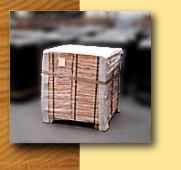
Our deliverable thicknesses
in Beech are from 1 mm to 3.00 mm. Nearly every thickness between is possible.
Our standard is 1.00; 1.20 mm and 1.50 mm. Here we have the most possibilities
for combination with many specifications to get high proportions of surface
(A or AB) quality. The export rate in this moment is nearly 90% with shipments
in all over the world. Every week 20 ft-or 40 ft hc containers are shipped
with high routine. The quantity for a container is calculated exactly
to get a volume of minimum 18-18,5 cubic meters per 20 ft-container (40
ft-container approx. 34 cubic meters). The export pallets are build from
100 x 80 mm sturdy square logs and covered with 30 mm chipboard to prevent
waviness. We can not give any prices in here, because they depend on individual
quality requirements of the final use at the client.
[Beech] [Poplar] [Worldwide Export]
© 2011by Joh. Sinnerbrink GmbH &
Co. KG
